

Your Daily Dose of Climate Hope: January 14, 2026
A giant new floating solar project!
China just brought online part of a 1,000 MW floating solar project!
Tell your state leaders to build floating solar for America!

Check out our amazing new CAN Action Carousel activism tool!
Reasons For Hope

The world’s largest-yet offshore solar project has been brought online off the coast of Dongying, in the Shandong province of China. It’s still under construction, but the completed parts are now connected to the grid. The HG14 project is a massive 1 GW (1,000 MW) project that when fully complete will include over 2.3 million solar panels (bifacial, with improved efficiency due to reflections off the sea surface below!) mounted on 2,934 fixed-pile steel platforms, plus 100 MW/200 MWh of co-located energy storage and fish farming under the platforms. It should meet the power needs of 2.67 million people!
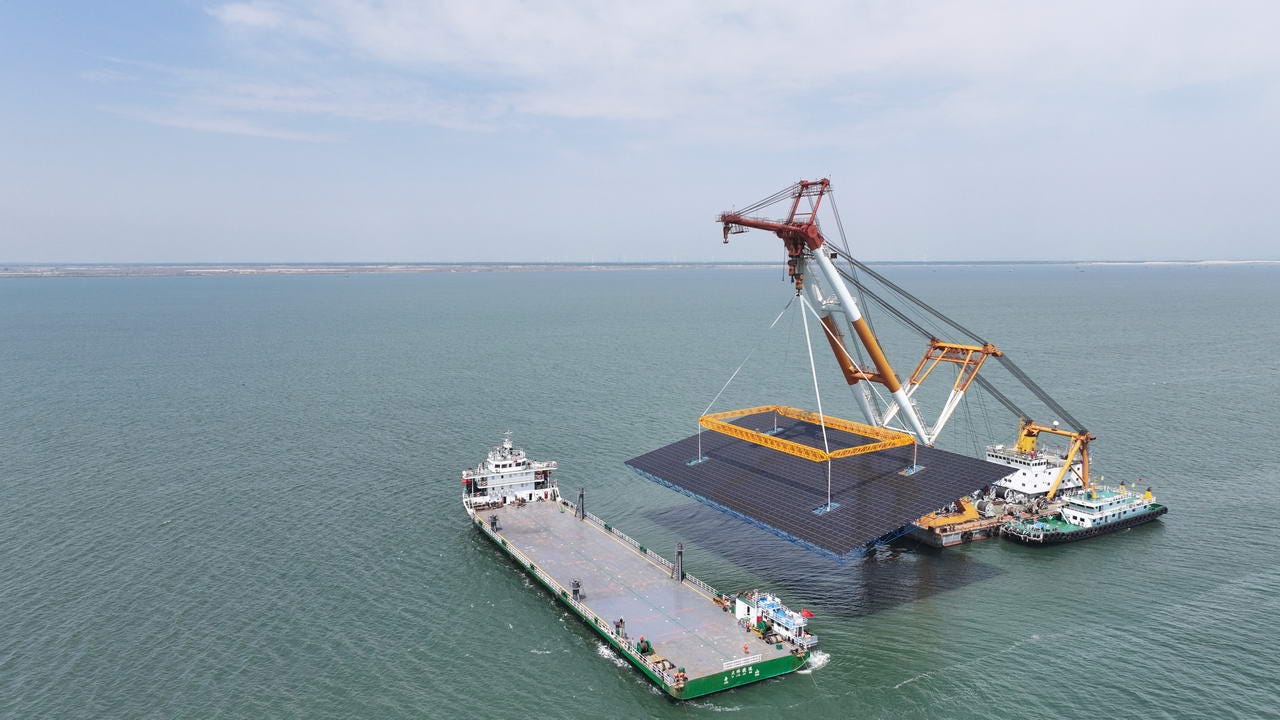
This is just one of many floating solar projects under construction in China: there’s also a 1.8 GW (1,800 MW) offshore solar project being built in the Bohai Sea off Hebei province near Beijing, with a potential national goal of up to 100 GW of offshore photovoltaic capacity by 2030.
There’s incredible untapped potential for floating solar in America! A new report from the U.S. Energy Department has quantified the immense potential for floating solar development across America. They found that even under the most conservative estimates, federally owned or managed reservoirs alone could host up to 77,000 MW (77 GW) of floating solar panel capacity. That’s enough to power 100 million American homes — a big chunk of the entire grid’s requirements! Developing even a tiny fraction of this would be a big boost to U.S. energy abundance.
Plus, solar panels on reservoirs shade and cool the waves beneath, helping prevent evaporation and conserving water supplies! The government of Colorado recently estimated that deploying floating solar on a few of the state’s reservoirs would save a gigantic 407,000 acre-feet of water.
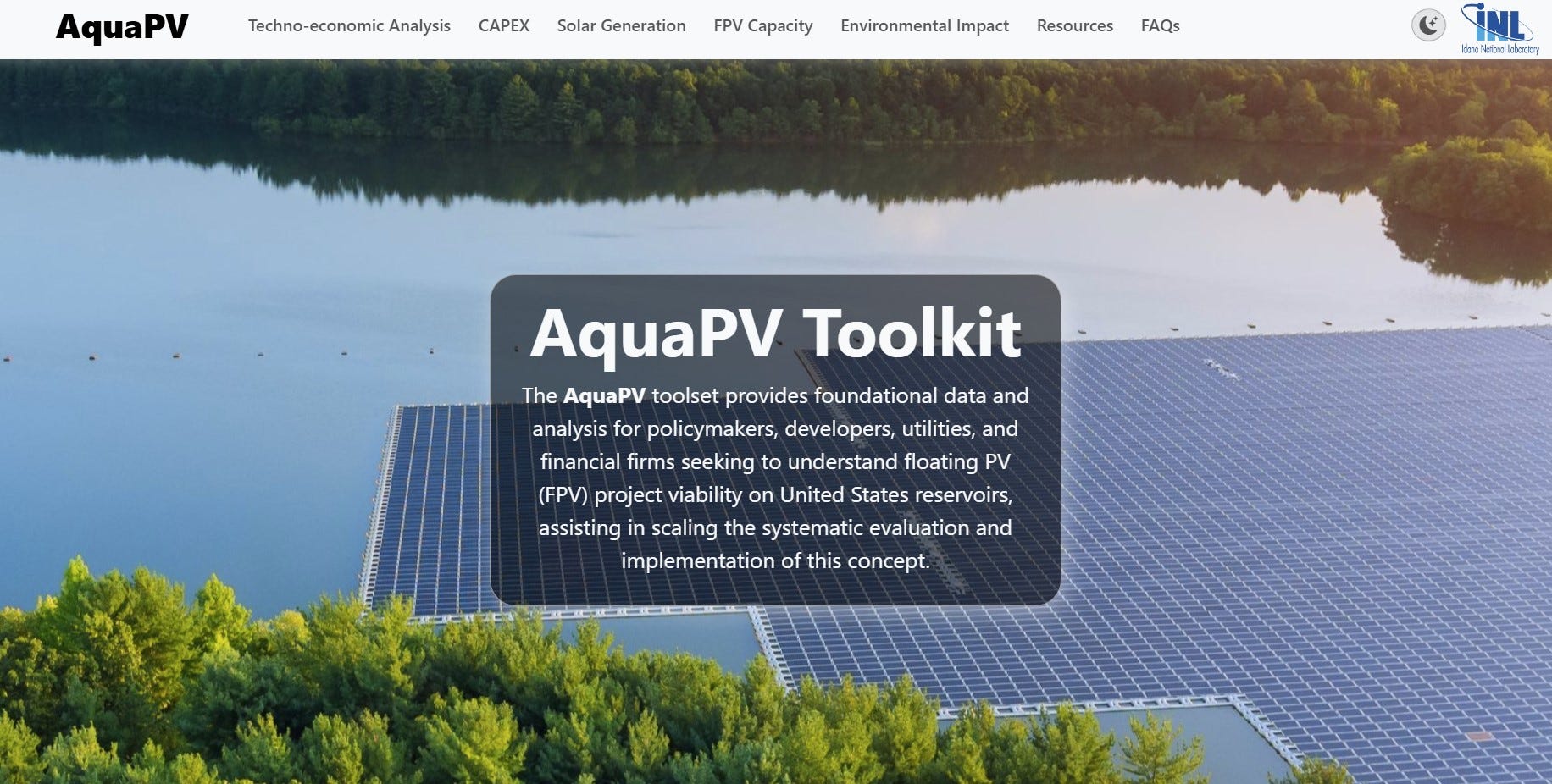
A U.S. National Laboratory has even created an in-depth AquaPV toolset, available for free at aquapv.inl.gov, to help policymakers, developers, and anyone else interested understand the floating solar potential of specific reservoirs. The AquaPV website provides in-depth pre-calculated details for 849 reservoirs across the nation, including the estimated developable area, the solar capacity that it could support, and even early technical, economic, and CAPEX analysis for potential floating solar projects on the reservoir.
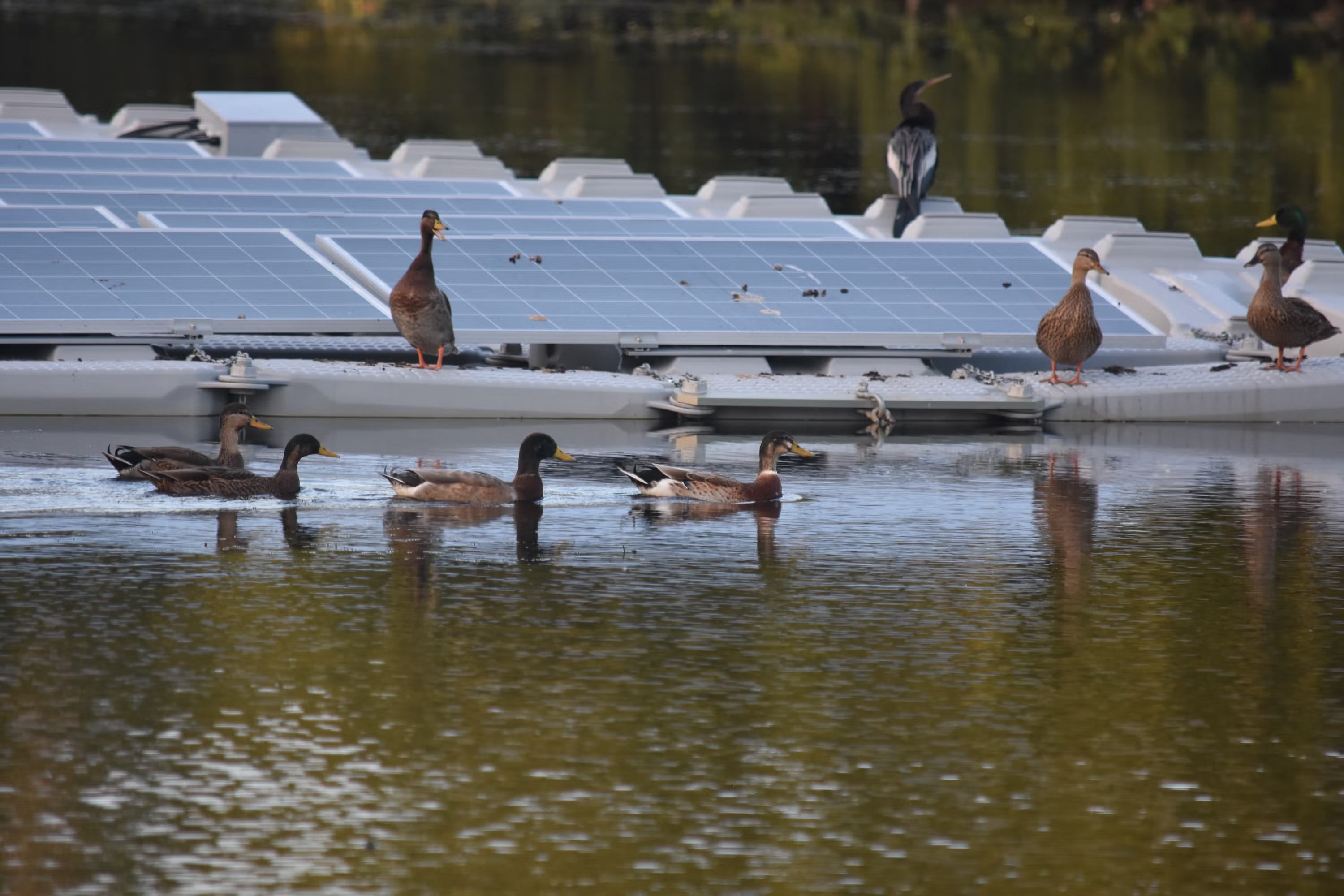
At a time of skyrocketing electricity bills due to artificial constraints on clean energy build-outs, fast-tracking U.S. floating social projects should be a no-brainer. It’s a giant win-win-win. There’s even some recent research finding that wild birds benefit from floating solar as a resting and nesting site!
State leaders should seize this golden opportunity for abundant clean energy (plus effective water conservation!) and actively advocate to build floating solar projects.
