


Wildlife crossings are spreading across America!
Tell Congress to support U.S. wildlife crossings!

Check out our amazing new CAN Action Carousel activism tool!
Reasons For Hope
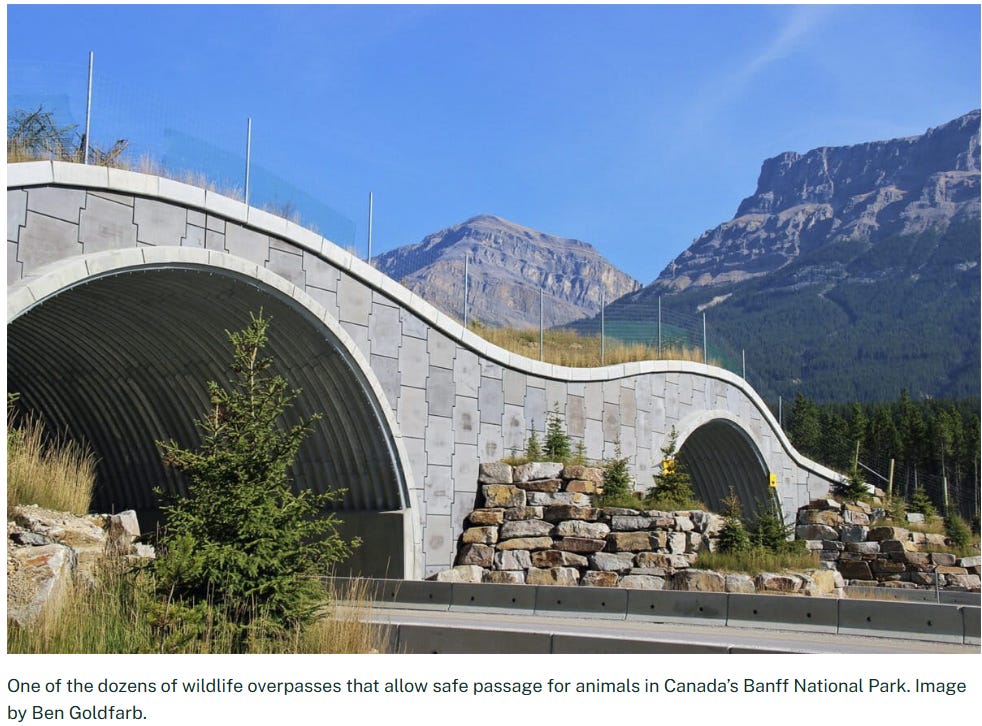
Wildlife crossings, from overpasses crossing roads to underpasses beneath them and rope bridges linking tree canopies above them, are increasingly popular around the world as a cost-effective way to let animals move safely through human-dominated landscapes.
They aren’t only an altruistic way to help animals. Each year, there are over one million car crashes with animals in the United States, killing around 200 people, injuring around 26,000 people, and costing about $10 billion in repairs and medical care. Studies have found that one wildlife crossing can prevent over 1,400 car accidents and save billions in medical and repair costs across a seventy-year lifespan.
In 2021, the U.S. government created the Wildlife Crossings Pilot Program, a $350 million grant program matching state funds, which has supported a flowering of innovative new wildlife crossing projects across America in the 2020s.
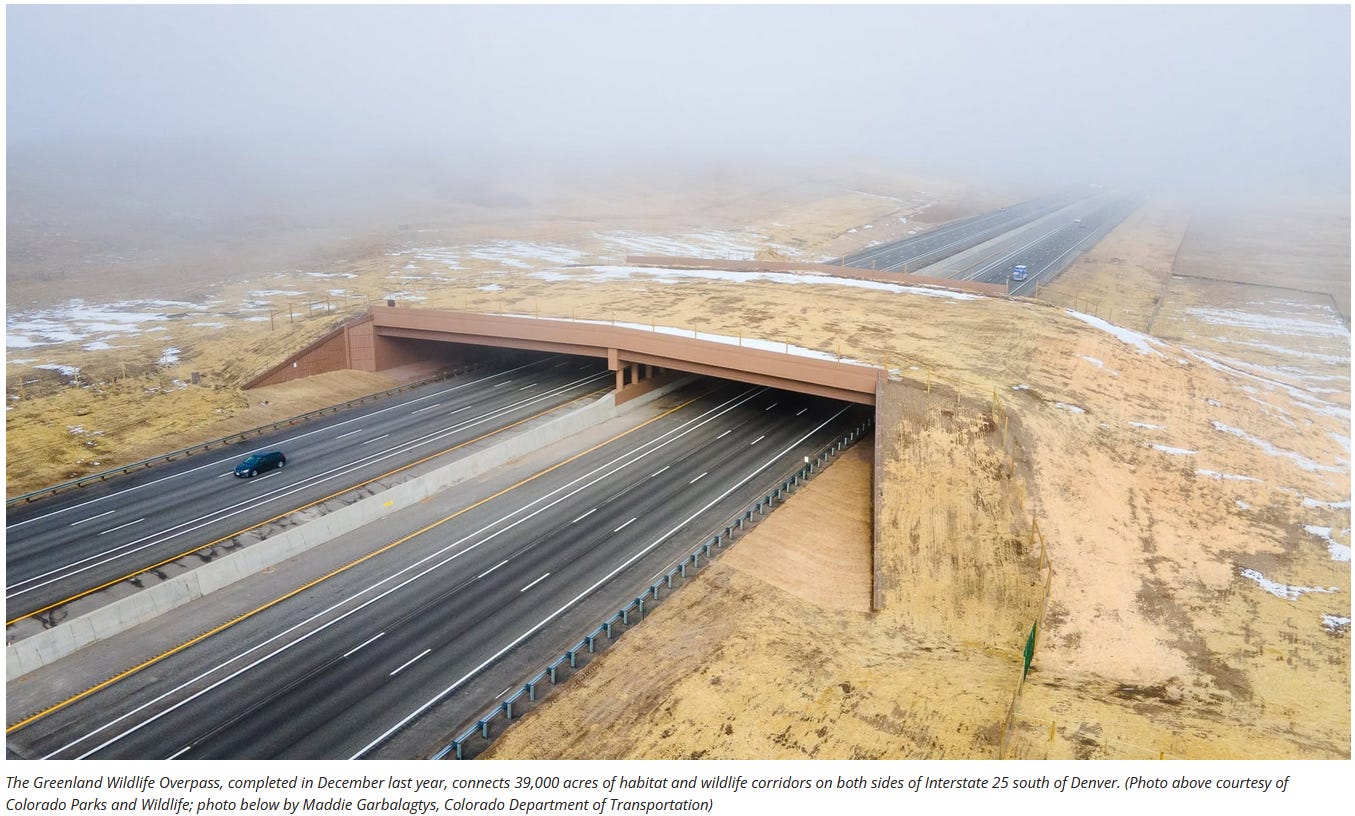
Colorado recently finished one of the largest wildlife crossings on Earth over the I-25 highway. The state expects its network of six new crossings to reduce roadkill by 90% and reunite 40,000 acres of habitat!
In 2023, Utah passed one of the largest-ever state appropriations for wildlife crossings. New Jersey recently passed a bill to create new wildlife crossings to ensure safe passage for the state’s bobcat population.
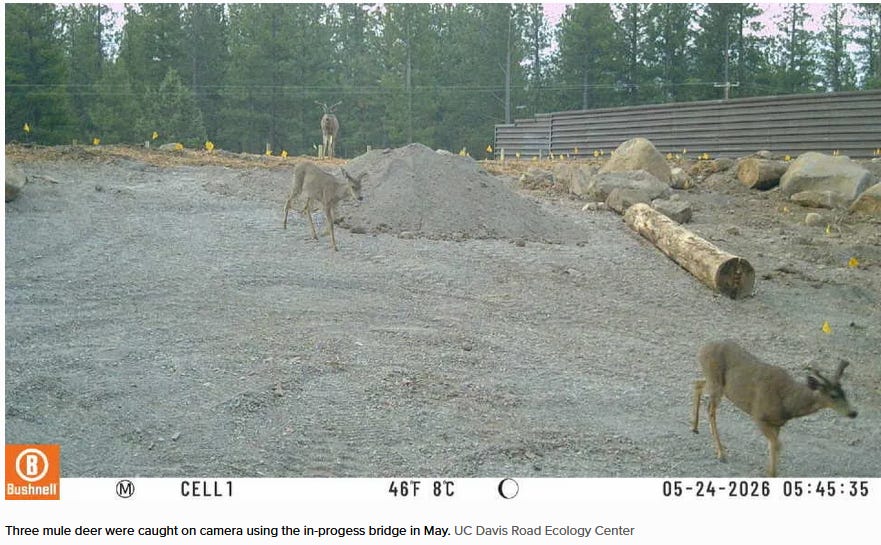
In July 2025, construction began on a wildlife overpass bridge in Siskiyou County, California, offering a safe migration route over a high-roadkill stretch of the State Route 97 highway. It’ll be finished in fall 2026, but wildlife are already using it, with three mule deer photographed crossing in May 2026 between construction periods.
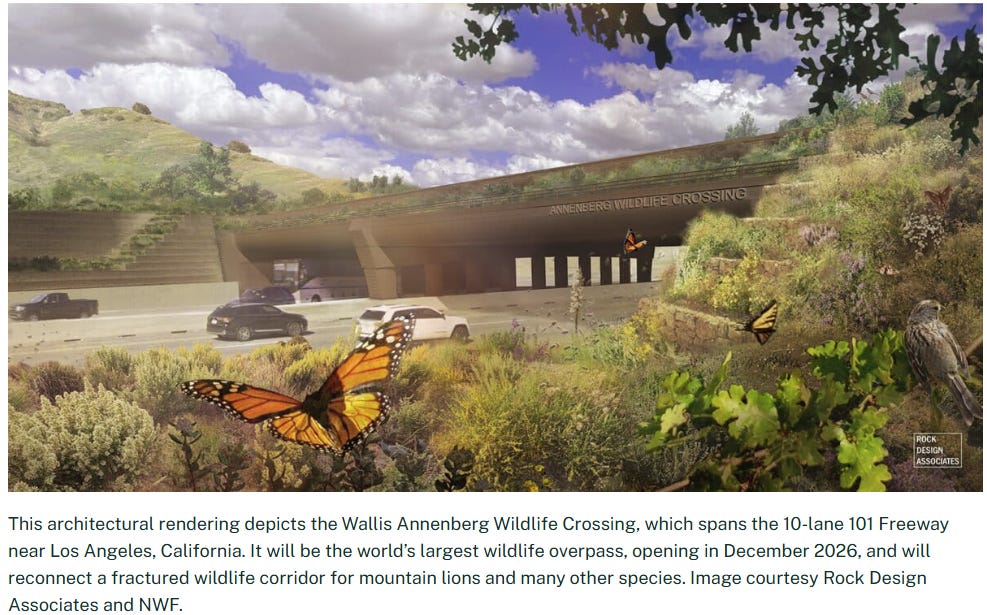
The Wallis Annenberg crossing now under construction near Los Angeles will be one of the largest crossings in the world when complete in December 2026.
And in Wyoming, the Kemmerer South Wildlife Crossing Project will provide new safe passage to migrating deer and pronghorn herds when complete in October 2027.
The Wildlife Crossings Pilot Program is now expiring, but there’s bipartisan momentum to make the program permanent! There’s currently wildlife crossing funding in the text of a proposed bipartisan transportation bill in the House and a dedicated Wildlife Road Crossing Program Reauthorization Act in the Senate. Congress should seize this opportunity to protect the connectivity of America’s ecosystems and the safety of human travelers by investing in sensible win-win wildlife crossing infrastructure.
Tell Congress to support U.S. wildlife crossings!
Your Dose of Climate Hope is written by Sam Matey-Coste for Climate Action Now.