


Know an organization with a website? They can inspire climate action in minutes. Tell them about our FREE Action Carousel.
In Vancouver, returning a plot of land to the Squamish Nation led to the building of an incredible new sustainable housing development!
Tell your state leaders to support land-back for urban housing!

Check out our amazing new CAN Action Carousel activism tool!
Reasons For Hope
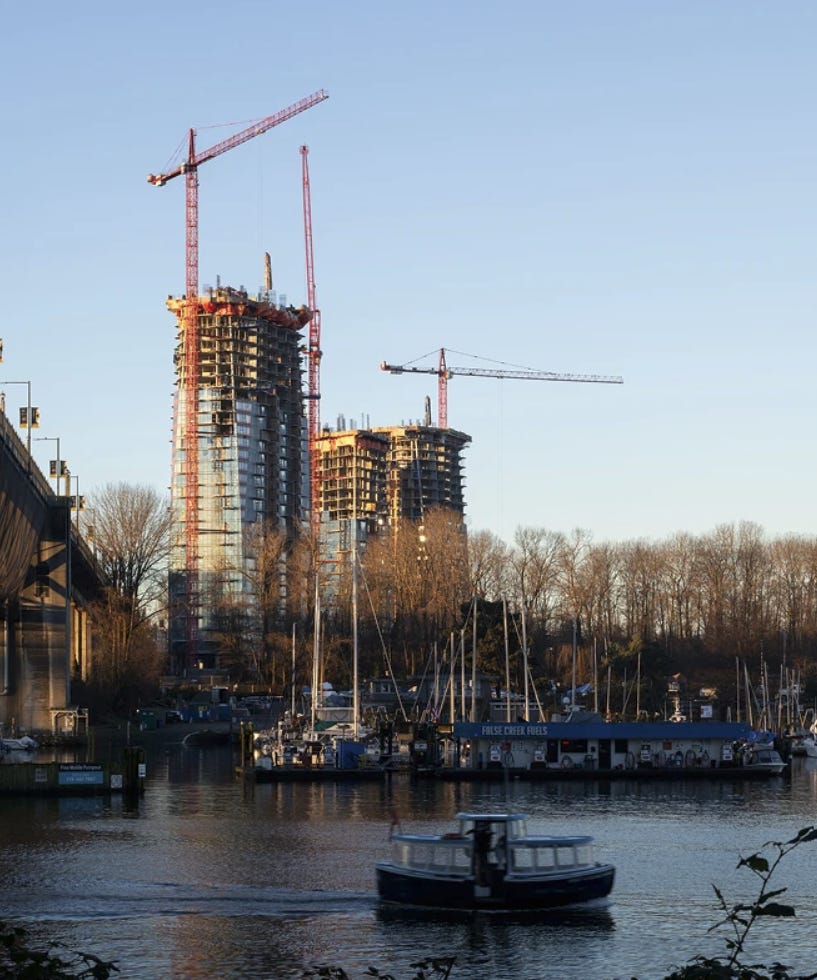
In 1913, the Squamish1 Nation were illegally evicted from a reservation on part of their ancient lands, a coastal inlet now within the city of Vancouver, Canada. In the 21st century, a court case returned a tiny 11.7-acre patch of urban land. Then, the Squamish chose to build a world-leading carbon-neutral walkable housing development there, cleverly using their new tribal sovereignty rights on the returned land to set their own zoning codes less restrictive than the surrounding city!
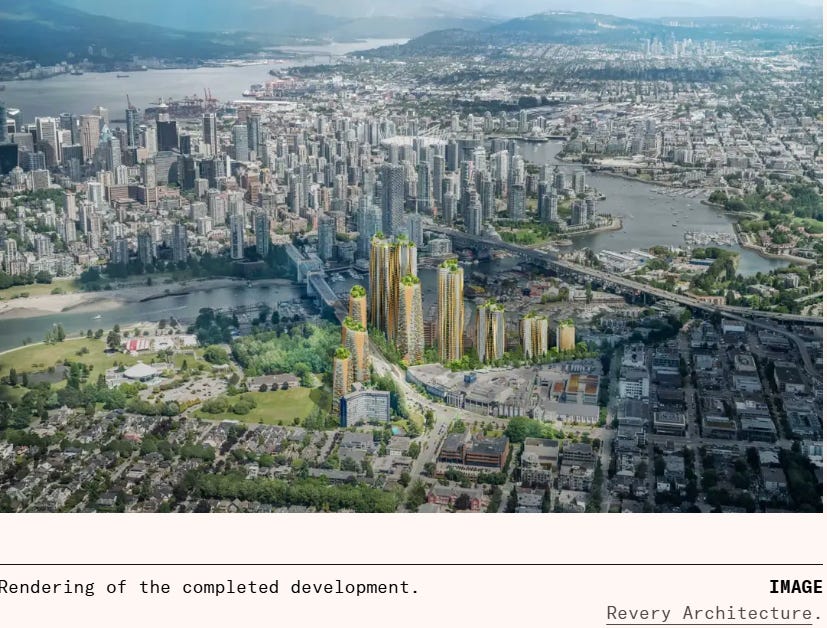
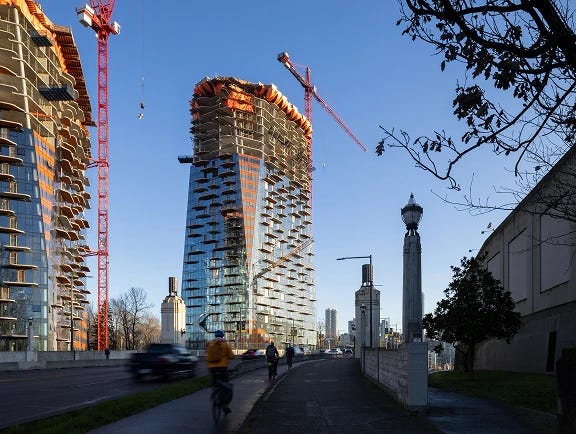
With no car-incentivizing height limits or parking minimums, a dense and walkable cluster of apartment buildings became feasible, allowing much more housing to be built in a small area than in other jurisdictions. The Sen̓áḵw project is now well under construction, with eleven giant new apartment towers set to house 9,000 people gradually rising over the city alongside new bicycle paths, seawall repairs, and street signs in English and Squamish! The first move-ins are expected to begin in 2026.
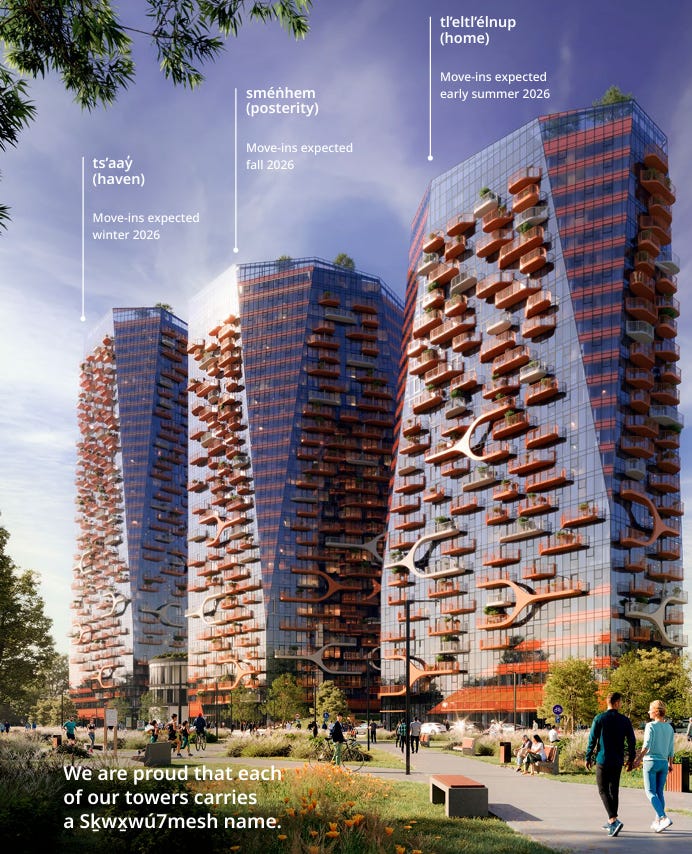
The new apartments are divided into three categories: some reserved for Squamish Nation members, some capped at affordable housing rates for non-Squamish, and some market-rate to fund the endeavor. Senakw represents a whopping 7% of all new housing set to be built across all of Vancouver through 2033, providing a vital resource for an in-demand city. These new homes are also pioneering an ingenious new form of ground-source heat pump, with a common district heating system providing carbon-free warmth to all buildings in the winter.
This is a spectacular win-win model that U.S. state leaders should emulate2! There’s already a growing “land-back” movement to return some state land to traditional Native American owners (California just returned 136 acres on the Mendocino coast) and also growing recognition of the dire need to expand housing supply in cities where restrictive zoning has driven prices sky-high. States should actively seek out Native American partners to enact a “Senakw model” of land-back for urban housing: transfer state-owned parcels of land in housing-needy areas to tribal sovereignty, then let sustainable housing arise without being constricted by surrounding zoning limits!
Tell your state leaders to support land-back for urban housing!
Your Dose of Climate Hope is written by Sam Matey-Coste for Climate Action Now.

“Squamish” is sometimes also written “Sḵwx̱wú7mesh”, in an effort to more closely track the traditional pronunciation.