

Your Daily Dose of Climate Hope: January 16, 2026
Canada's record-high crop yields!
Canada is seeing record-high crop yields despite floods and droughts, thanks in large part to widespread adoption of no-till farming.
Tell Congress to support no-till farming!

Check out our amazing new CAN Action Carousel activism tool!
Reasons For Hope
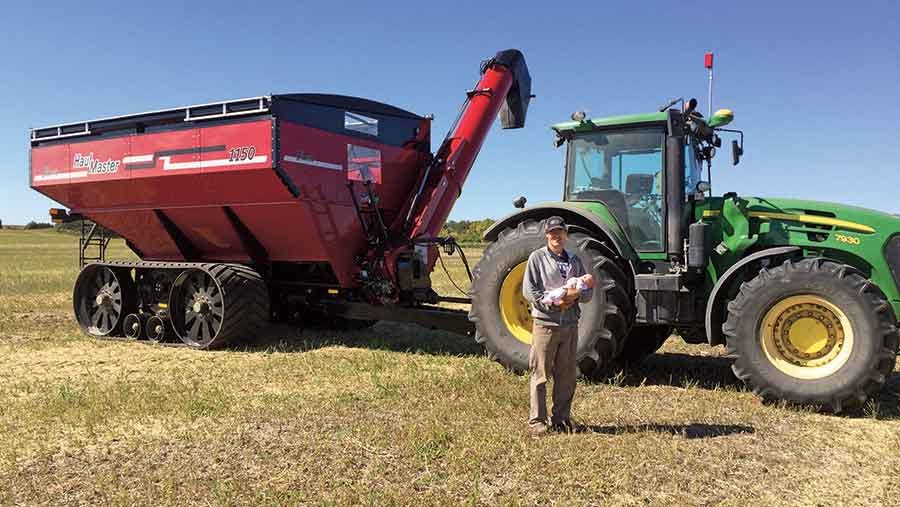
Farmers in the prairie provinces of Canada are producing record-high crop yields despite the escalating droughts and floods of climate instability. Canada’s spring wheat yielded an average of 58.8 bushels per acre in 2025, up by a whopping 77% in 30 years, while canola yields doubled to 44.7 bushels per acre in the same period. The adoption of a wide range of new technologies and strategies, from high-tech inventions to low-tech adaptations, has supercharged productivity and resilience!
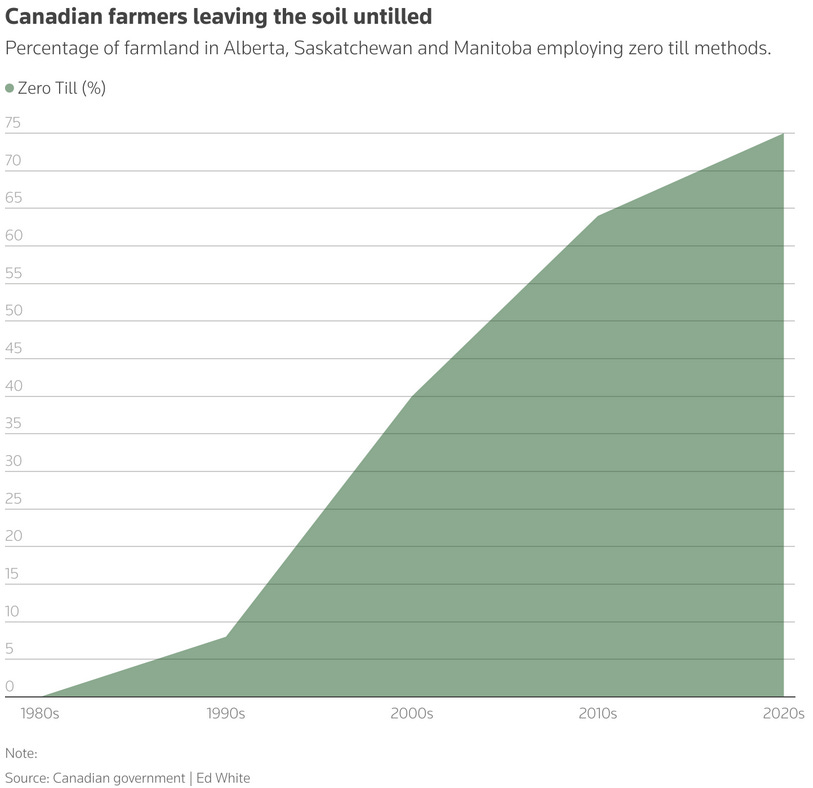
One major contributor to this innovative abundance is no-till soil-conserving farming, which has spread rapidly across Canada in recent years. No-till farming leaves crop residue on the field after harvest and plants seeds without first tilling the soil, causing less disturbance to soil structure and microbes. This leads to more soil organic matter, more resistance to erosion, a higher water-holding capacity, and overall healthier, more productive soil in the long term. Across Alberta, Saskatchewan, and Manitoba, the fraction of farmland employing no-till farming rose from less than 10% in the 1990s to over 60% in the 2010s and over 70% by the 2020s! The Mowbray farmer family told Reuters that using no-till farming (and tile drainage) allows them to “pull off yields twice what we used to with half as much rain.”

There’s immense untapped potential for no-till farming in America. The USDA reported in 2017 that continuous no-till farming has been adopted across only 21% of U.S. cropland (though fortunately that share has been increasing slightly). They calculate that a farmer switching 1,000 acres from continuous till to no-till would save 4,160 gallons of diesel fuel per year, a direct money-saving opportunity in addition to the long-term benefits from more productive and resilient soil! Furthermore, one USDA-funded NCSU study in 2022 found that higher rates of no-till farming increases land value at the county level, by as much as $14.75 per acre in Iowa.
No-till farming is a great tool to help ensure ongoing agricultural abundance despite climate destabilization, feeding humanity while reducing environmental damage! Congress should proactively support increasing its use across America’s farms, both restoring funding for USDA conservation farming programs and incentivizing no-till farming adoption in the next1 Farm Bill2!
Tell Congress to support no-till farming!

Yep, it’s still delayed. The next Farm Bill has been delayed over and over and over due to political chaos, increasing uncertainty for U.S. farmers.
Our previous Farm Bill-related policy actions include climate-resilient crops, methane-reducing vaccines for cattle, methane-eating microbes, phytomining, electro-agriculture, decentralized clean ammonia production, steam seed treatment, AI-accelerated crop breeding, low-methane rice, cellular agriculture, agrivoltaics, real-time crop disease alerts, nanoscale selenium application, winter flooding of rice fields, self-fertilizing wheat, and soil seismology!